
Last updated on November 13th, 2026 at 02:20 pm
Technically Reviewed by: Marsh M. | Licensed Appliance Technician | 15+ years experience | Perth & Melbourne
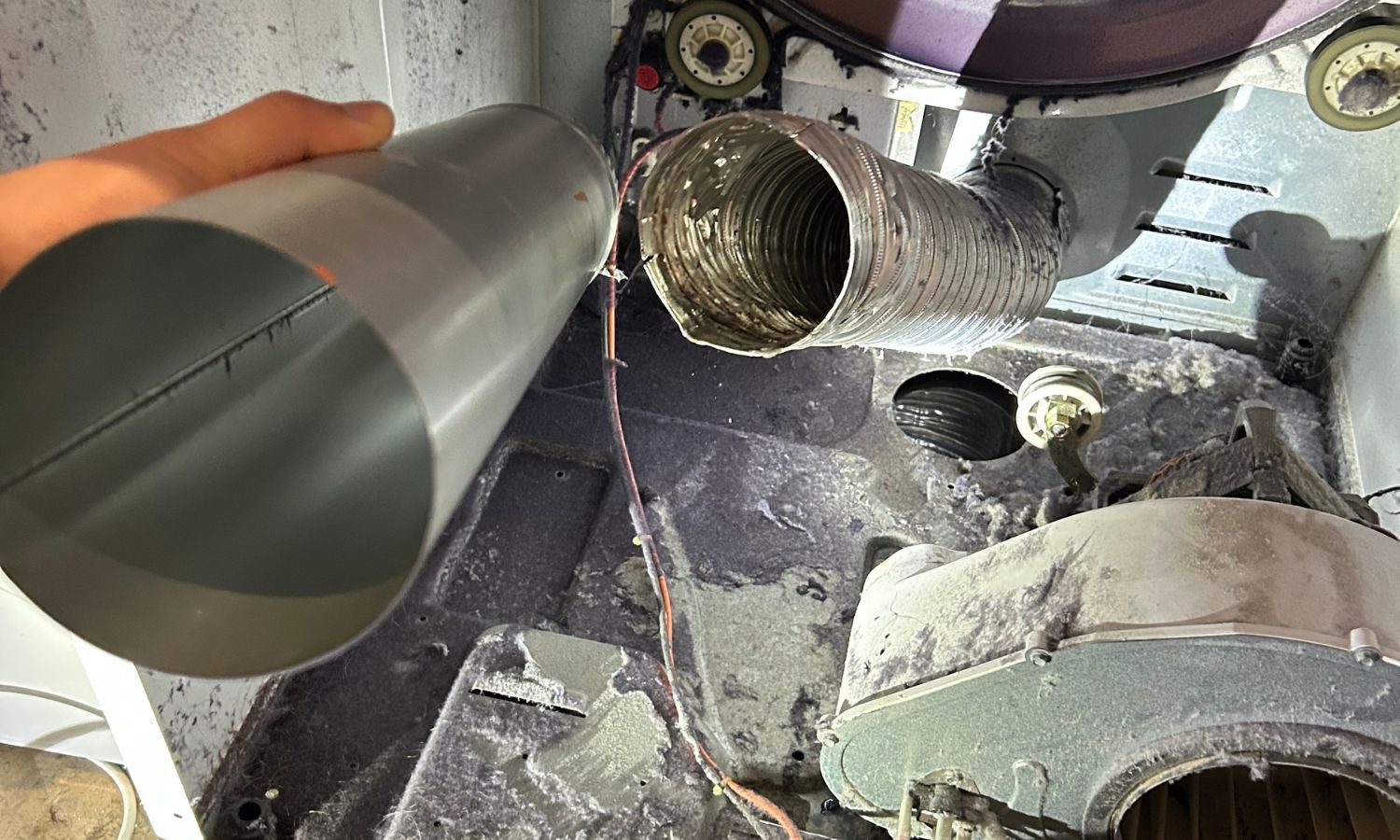
If your dryer is taking longer and longer to dry a load, or the laundry feels like a sauna when it runs, a clogged vent is one of the first things to check. Lint that gets past the filter builds up in the hose, the hot, damp air can’t escape, and the dryer has to work harder. A clogged vent can restrict airflow and cause heat to build up inside the dryer. Because lint is combustible, keeping the vent clear is also an important fire-safety measure.
The good news is that on most Australian dryers, cleaning the vent is a simple job you can do yourself.
First, Does Your Dryer Have a Vent?
Not every dryer does. The Australian Government’s Energy Rating guide explains the three main types:
- Vented dryers blow hot, damp air out through a hose at the back, either into the laundry or outside through a vent kit. This guide is for you.
- Condenser dryers cool the air inside the machine and collect the water in a container or pump it to a drain. There’s no vent hose, but there is a condenser to clean.
- Heat pump dryers work in a similar way to condenser dryers, with filters and a condenser that need regular cleaning.
If you have a condenser or heat pump dryer, skip to “What to Clean Instead” below.
Signs Your Dryer Vent Is Clogged
- Clothes take longer to dry, or are still damp at the end of a cycle
- The outside of the dryer gets hotter than usual
- The laundry gets very humid or steamy when the dryer runs
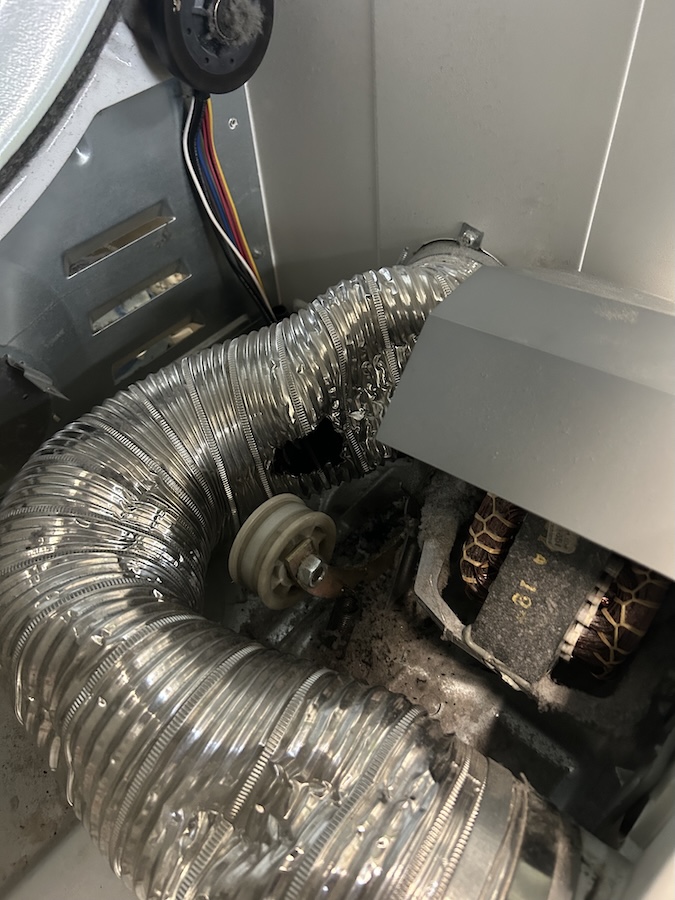
- Lint collects around the hose connection or behind the dryer
- The dryer cuts out partway through a cycle
- You notice a burning smell (stop using it and see below)
How to Clean a Dryer Vent Hose
You’ll need a vacuum cleaner with a hose attachment, a long flexible brush if you have one, and a torch.
- Unplug the dryer and let it cool down.
- Clean the lint filter first. Pull it out and remove the lint. If the filter looks clogged or has a waxy residue, check your manual to see whether it can be washed. If so, wash it in warm, soapy water and let it dry completely before refitting it. Fire and Rescue NSW recommends cleaning the lint filter every time you use the dryer.
- Carefully pull the dryer forward so you can reach the back. If your dryer is wall-mounted or stacked, don’t try to take it down yourself. See below.
- Detach the hose from the outlet at the back of the dryer. Most hoses twist or slide off, or are held by a clamp.
- Clear the hose. Shake out loose lint, then vacuum inside both ends. A flexible dryer-vent brush can help reach further inside. Use it gently to avoid damaging the hose. Check the hose for tears, holes or crushed sections.
- Vacuum the dryer’s outlet, only as far as you can reach easily from the outside. Don’t take the back panel off.
- Check the other end, if you can reach it safely. If the hose runs to a wall or window vent that’s easy to get to, make sure the flap opens freely and isn’t blocked by lint, leaves or nests. Don’t climb onto the roof or take apart wall ducting to reach an outlet. Leave that to a professional.
- Refit the hose so it runs as short and straight as possible, with no kinks or sharp bends, and isn’t squashed behind the dryer.
- Plug the dryer back in and run a short cycle. Check that air is flowing freely from the hose outlet and that the hose isn’t getting unusually hot.
If the hose is torn, brittle or crushed, replace it with one designed for dryers.
Wall-mounted and stacked dryers
Wall-mounted and stacked dryers are heavy and awkward to take down, and the vent connection is often hard to reach. Clean the lint filter and any parts you can reach from the front, and leave the rest to a technician.
Condenser and Heat Pump Dryers: What to Clean Instead
These dryers have no vent hose, but they still clog, just in different places:
- The lint filter or filters, after every load. Many heat pump dryers have more than one.
- The condenser. Electrolux recommends checking it every month. Only remove and rinse it if your manual says you can.
- The water container, after every load, unless your dryer drains to a pipe.
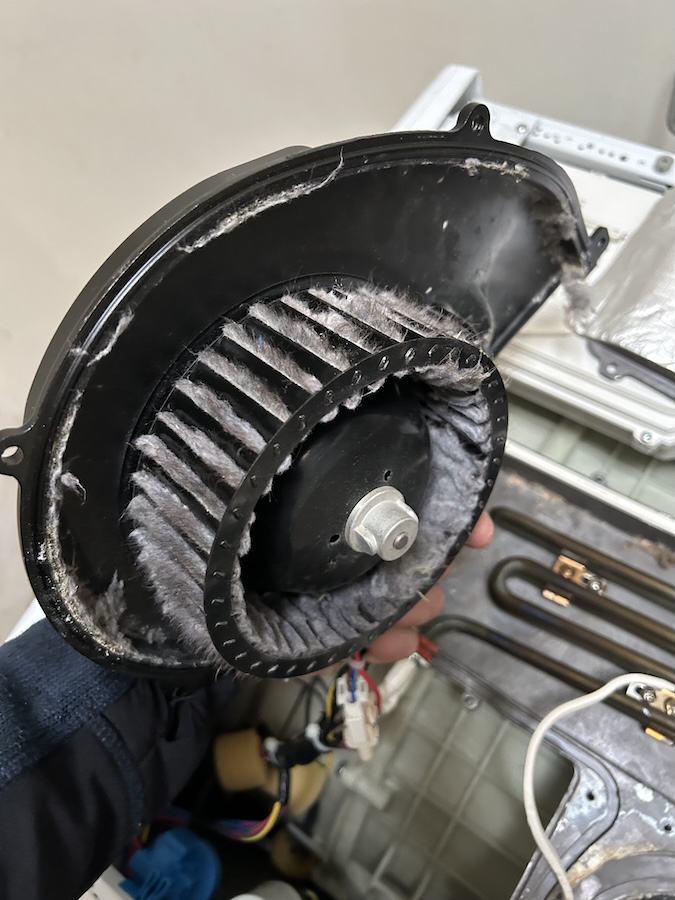
A blocked condenser causes the same problems as a blocked vent. We regularly find completely blocked condensers on dryers that “won’t dry” or show error codes, including Haier condenser dryers showing E1 and E6 errors.
When It’s More Than the Vent
Some airflow problems are inside the dryer, where you can’t safely reach. On one Bosch washer dryer that wasn’t drying properly, the heating was fine, but the internal air duct between the fan and the drum needed cleaning. On a stacked Westinghouse heat pump dryer, poor airflow was making the compressor overheat, and it needed a full blow-out and condenser clean in our workshop.
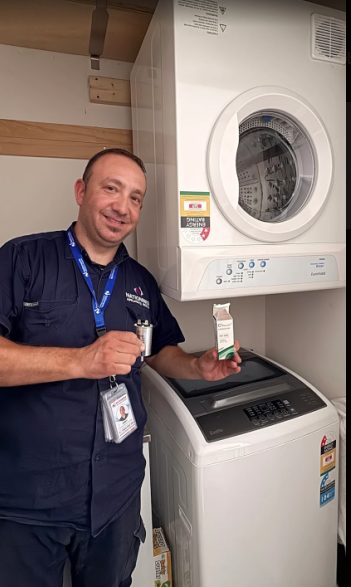
Even simple things can block airflow. On several commercial dryers, a screw was stopping staff from cleaning the filter properly. Our technician removed it and showed them how to keep it clean.
Call a technician if:
- the dryer still runs hot or dries slowly after you’ve cleaned the filter and hose
- there’s lint built up inside the cabinet
- the dryer keeps cutting out mid-cycle, which can mean it’s overheating. See our guide on how to tell if a dryer thermal fuse has blown
- you notice a burning smell or smoke. Switch the dryer off at the wall, unplug it if it’s safe to do so, and don’t use it until it’s been checked
Opening the cabinet means working near electrical parts, so leave that to a technician. Our guide on what you can safely fix yourself covers the other checks.
Frequently Asked Questions
Clean the lint filter after every load, and check the vent hose every few months, or sooner if you use the dryer a lot or notice it drying more slowly. Your manual may give a specific interval.
A clogged vent restricts airflow, which can cause the dryer to overheat. Combined with combustible lint, this increases the risk of a dryer fire. Clean the lint filter after every load and keep the hose clear. Avoid running the dryer when nobody is home, and never leave it running while you’re asleep.
No, because they don’t have a vent. They do need their filters and condenser cleaned regularly, as your manual describes.
Check the program and load size, and make sure the filter is fully clean. If it still isn’t drying, the cause may be the heating element, a thermostat or another part. Our guide on why a dryer is not drying goes through the causes.
Often, once the airflow problem is fixed. But if it’s old and needs major parts, replacement may make more sense. Our guide on whether it’s worth repairing a dryer explains how to decide, and our dryer repair cost guide explains how repairs are charged.
Need a Hand?
If your dryer is still running hot or slow after a clean, our technicians can find the cause and clear airflow problems inside the machine.
Book a dryer technician in Perth, Adelaide, Sydney, Melbourne or Brisbane. Book online or call 1300 834 633.