Last updated on November 10th, 2026 at 11:51 am
Technically Reviewed by: Marsh M. | Licensed Appliance Technician | 15+ years experience | Perth & Melbourne
An oven that suddenly stops working usually does it at the worst moment, halfway through dinner or right before guests arrive. The good news is that some ovens that seem completely dead have a simple cause, like a tripped switch, a clock that needs setting or the wrong cooking function. Others have a failed part that needs a technician to diagnose.
The trick is working out which kind of “stopped working” you have, because each one points somewhere different.
What Is Your Oven Doing?
| What you’re seeing | Most likely area | See the section |
| No lights, no display, nothing at all | Power supply to the oven | Oven completely dead |
| Display or light on, but no heat | Settings, clock or a heating part | Display on but won’t heat |
| It cut out partway through cooking | Overheating protection or an element | Stopped while cooking |
| The cooktop works but the oven doesn’t | A fault inside the oven itself | Oven not working but the stovetop is |
| Gas oven won’t light or stay lit | Ignition or flame safety device | Gas oven won’t light |
Oven Completely Dead? Start With the Power
If there’s no display, no light and no fan, power isn’t reaching the oven. Check these before anything else:
- The switchboard. Most Australian ovens are hardwired on their own circuit. Look for a circuit breaker labelled oven, range or cooking, and check whether the safety switch has tripped.
- The wall switch. Many kitchens have an isolating switch for the oven or cooktop, often on the wall near the bench. It’s easy to bump off while cleaning.
- A power outage. If the power has been off in your area, the oven may need its clock reset before it will do anything (more on that below).
If a breaker or safety switch has tripped, first check for a burning smell, scorch marks, visible damage or water around the oven or its power connection. If you notice any of these, leave it off and call a technician. If there are none, you can switch it back on once. If it trips again, leave it off. Our guide to a blown oven fuse goes through the switchboard checks step by step.
It’s worth doing these checks even if they seem too obvious. On one recent job, a freestanding cooker’s igniter wasn’t working because its circuit breaker had been switched off. On another, an induction cooktop that “wouldn’t turn on” had simply been switched off at the wall.
Display On but the Oven Won’t Heat
If the clock, light or fan still works, the oven is getting power. Before assuming a part has failed, rule out these settings:
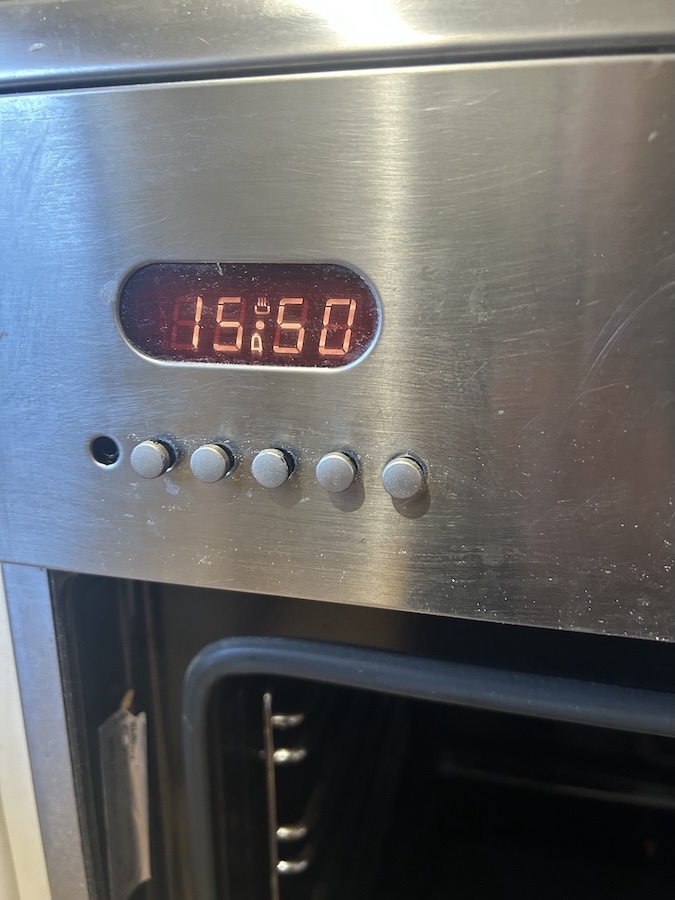
- The clock hasn’t been set. On many ovens with a programmable timer, you need to set the time before the oven will heat. Westinghouse’s support page lists this as the first fix for an oven that isn’t heating or switching on. It catches a lot of people out after a power cut. Our guide on how to reset your stove after a power outage covers this.
- A timer or auto-cook setting is active. If a delayed start or timed program has been set, the oven may wait rather than heat straight away.
- The child lock is on. A lock symbol, or “LO” on some models, can stop the controls from responding. Your manual will show how to turn it off.
- The cooking function. Different functions use different elements. One customer reported their Bosch pyrolytic oven’s bottom element wasn’t heating. The oven was fine. It was set to fan grill, which doesn’t use the bottom element. Our technician checked the temperature with a thermal gun and showed them the fan-forced setting instead.
- Demo or showroom mode. Some ovens have a display mode that runs the lights and controls without heating. If yours is new or recently moved, check the manual for how to turn it off.
If none of these explain it, the cause is likely inside the oven. The usual suspects are a failed heating element, the thermostat or temperature sensor, the selector switch, a thermal cut-out or the control board. These all sit behind panels on a hardwired appliance, so they’re a job for a technician.
Oven Stopped Working While Cooking
An oven that cuts out partway through cooking is usually reacting to one of two things.
It has overheated. Many ovens have a thermal fuse or thermal cut-out that cuts the power if part of the oven gets too hot. A failed cooling fan, blocked vents or a very long, high-temperature or self-cleaning cycle can set it off. Some thermal cut-outs reset once the oven cools, while a thermal fuse has to be replaced once it has blown. So an oven that dies mid-cook and comes back later may point to an overheating problem. Either way, the cause of the overheating needs to be found, or it will happen again.
A part has failed under load. A heating element can break down as it heats, which often trips the safety switch. On a recent job, a Westinghouse freestanding electric oven kept tripping the power. Our technician found the fan-forced element had failed, replaced it from his van stock and had it running again on the same visit.
If your oven sparked, smoked or smelled of burning before it stopped, switch it off at the switchboard and don’t use it until it’s been checked.
Oven Not Working but the Stovetop Is
This one confuses a lot of people, but it’s actually a helpful clue.
On an electric freestanding cooker, the oven and cooktop usually share one power supply. If the hotplates work, power is reaching at least part of the appliance, which makes a fault in the oven section more likely. The oven element, its thermostat, the selector switch, a thermal cut-out or the clock and timer are the usual causes. Check the clock and settings above first.
On a gas cooker, working burners show that gas is reaching the cooktop. If the oven won’t light or won’t stay lit, the fault may be in the oven’s own ignition or flame safety system (see the next section). Some gas ovens also need electricity for the igniter, fan or light, so check the power as well.
If you have a separate wall oven and cooktop, they’re often on different circuits, so the switchboard is still worth checking.
Gas Oven Won’t Light or Won’t Stay Lit
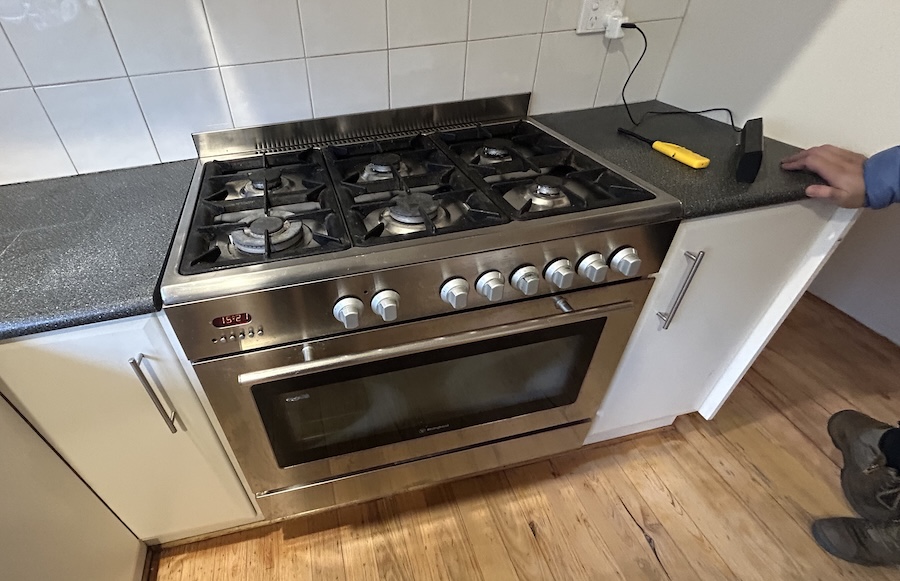
Gas ovens have a flame safety device, often a thermocouple, that shuts off the gas if it doesn’t detect a flame. When it wears out, the oven may light and then go out as soon as you let go of the knob, or not light at all. A weak or failed igniter is another common cause.
We see thermocouple faults regularly, particularly in commercial kitchens. On one commercial gas oven, the pilot was lit but the main flame kept dropping out. A new thermocouple fixed it.
Follow your manual’s lighting instructions, and don’t keep trying if it won’t light. Gas faults aren’t DIY jobs. Leave them to a technician.
If you smell gas, turn the oven off if it’s safe to do so, open doors and windows, and don’t light flames or use electrical switches. If the smell is strong or you feel unsafe, leave the area straight away. Then, from a safe location, call your gas distributor’s emergency number or a gas fitter. Energy Safe Victoria explains what to do in a gas emergency. Sometimes the cause is simple. On one urgent call-out for a gas smell, a burner knob on a commercial range hadn’t been turned fully off. But always treat a gas smell as serious until it’s been checked.
What Not to Do
Some advice online suggests taking out elements, igniters or door springs yourself. We don’t recommend it:
- Don’t open the oven’s panels or test parts yourself on a hardwired oven. The Electrical Safety Office in Queensland lists repairing an electrical appliance as electrical work.
- Don’t keep resetting a switch that trips straight away. It’s protecting you from a fault.
- Don’t bypass a thermal cut-out or safety switch.
- Don’t light a gas oven with a match unless your manual specifically tells you how, and never if you can smell gas.
Is It Worth Repairing?
Some ovens that stop working have a fault in a single part, such as an element, thermostat, selector switch or thermocouple. These are common repairs, although the actual cause needs to be confirmed by diagnosis. Our technicians carry commonly used parts in their vans, so many faults can be fixed on the first visit, subject to availability.
Whether it’s worth fixing depends on the oven’s age, its condition and the cost of the part. A newer oven with a failed element is a very different decision to an old one with a failed control board. Our oven repair cost guide explains how repair costs work. Our service call covers the first 30 minutes of diagnosis or repair, with extra labour and parts charged separately. See our pricing page for current fees.
If your cooktop is damaged too, our guide on using your oven with a cracked glass cooktop covers what’s safe. For a broken handle, see how to repair an oven door handle.
Frequently Asked Questions
The most common causes are a tripped circuit breaker or safety switch, a clock that needs setting after a power outage, a failed heating element, or a thermal cut-out that has switched the oven off after overheating. Check the switchboard and the clock first.
The most common causes are a tripped circuit breaker or safety switch, a clock that needs setting after a power outage, a failed heating element, or a thermal cut-out that has switched the oven off after overheating. Check the switchboard and the clock first.
If the cooktop works, power or gas is reaching the appliance, so the fault is in the oven section. In an electric oven, that’s often the element, thermostat, selector switch or clock. In a gas oven, it’s often the igniter or the flame safety device.
It may have overheated and triggered its thermal cut-out, or a heating element may have failed and tripped the power. Switch it off and let it cool. If it trips again or smells of burning, leave it off and have it checked.
Yes. Many ovens with a programmable clock won’t heat until the time is set again after the power has been off. A power surge can also damage the control board, though that’s less common.
If the oven is in good condition and the fault is a single part, repair is often worth it. If it’s old, has other problems or needs an expensive part like a control board, it may be time to compare the cost against a new one. A technician can tell you which applies once they’ve diagnosed it.
Getting Your Oven Working Again
If you’ve checked the power, the clock and the settings and your oven still isn’t working, our technicians can find the fault and explain your options before any repair goes ahead. When you book, have your oven’s make and model number ready. It’s usually on a plate around the door opening.
We repair ovens in Perth, Adelaide, Sydney, Melbourne and Brisbane. Book online or call 1300 834 633.