

In cafés and commercial kitchens across Australia, appliance failures don’t just cause inconvenience. They directly impact service, revenue, and day-to-day operations.
A coffee machine breaking down during the busy morning rush, often between 7–9 am in many cafés, a refrigerator failing to maintain safe temperatures below 5°C, or a dishwasher going down mid-service can quickly disrupt workflow and affect customer experience.
In today’s hospitality environment, even a short disruption can have a noticeable impact. A coffee machine failure during peak service can reduce output for several hours, leading to missed orders and added pressure on staff during already busy periods.
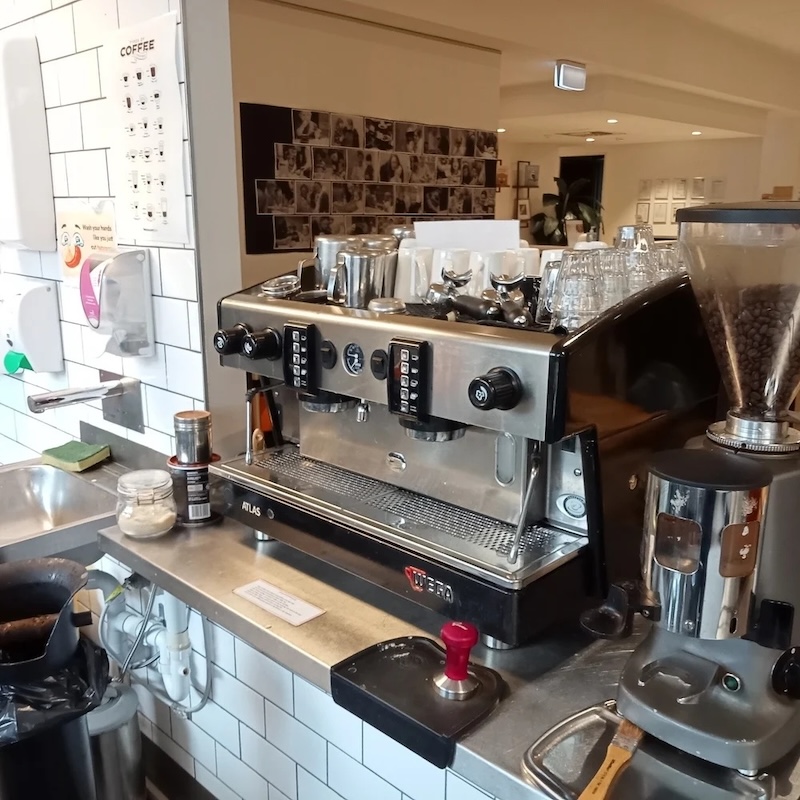
Commercial appliances in Australian venues operate under constant demand and often run long hours across metro and regional locations. Over time, faults develop through continuous use, exposure to heat and grease, and varying water conditions rather than isolated incidents.
Understanding how these issues occur and when repair is the more practical option helps businesses minimise service disruptions and keep operations running smoothly.
- The Real Cost of Downtime in a Commercial Kitchen
- Why Appliance Reliability Matters
- Common Appliance Issues in Cafés and Commercial Kitchens
- Typical Lifespan of Commercial Kitchen Appliances
- Repair vs Replacement: What Businesses Should Consider
- Cost Considerations for Commercial Repairs
- When Repair Is the Better Option
- When Replacement May Be Considered
- Do Commercial Appliance Brands Affect Repair Decisions?
- How Professional Diagnosis Supports Business Operations
- When Quality Appliance Repairs Supports Commercial Clients
- Maintaining Appliance Performance in Busy Kitchens
- Final Thought
The Real Cost of Downtime in a Commercial Kitchen
For businesses, the cost of an appliance failure goes well beyond the repair bill.
Downtime can result in:
- Lost sales during peak periods. A coffee machine failure during a busy service window can reduce output for several hours, which may translate to several hundred dollars in missed revenue, depending on service volume
- Delays in food preparation and service
- Increased pressure on staff and workflow disruptions
- Potential food safety risks and compliance issues with temperature logs
In high-volume cafés or busy kitchens, even a few hours offline can noticeably affect daily takings and service flow.
Why Appliance Reliability Matters
Reliable appliances are essential for maintaining consistent service quality, meeting food safety standards, and reducing operational pressure in busy Australian hospitality environments.
Common Appliance Issues in Cafés and Commercial Kitchens
Common problems include:
- Coffee machines losing pressure or producing inconsistent output, often due to scale build-up or worn pumps. Properly descaling your coffee machine can help maintain performance over time.
- Refrigeration units struggling to hold safe temperatures, which can impact food safety compliance issues like a freezer not freezing properly, can indicate underlying component or airflow problems
- Dishwashers failing to complete cycles or leaving residue due to blocked filters or pump issues, regular cleaning of the dishwasher drain can help prevent these faults.
- Ovens and cooktops are experiencing uneven heating due to worn elements or faulty sensors; in some cases, this may be related to issues like a blown oven fuse.
- Freezers and ice machines are underperforming due to restricted airflow or component wear
These faults are typically caused by component-level wear rather than complete system failure.
Why These Problems Occur
Commercial appliances face sustained heavy use, exposure to heat, grease, moisture, and Australia’s variable water quality. High-frequency cycles combined with inconsistent maintenance often accelerate wear on critical components.
Typical Lifespan of Commercial Kitchen Appliances
With proper maintenance, commercial appliances generally last:
- Coffee machines: 5–15 years
- Commercial refrigeration: 10–20 years
- Dishwashers: 10–15 years
Heavy daily use without regular servicing can shorten this significantly.
Repair vs Replacement: What Businesses Should Consider
The decision isn’t just about cost. Key factors include downtime, operational impact, replacement lead times, and installation requirements.
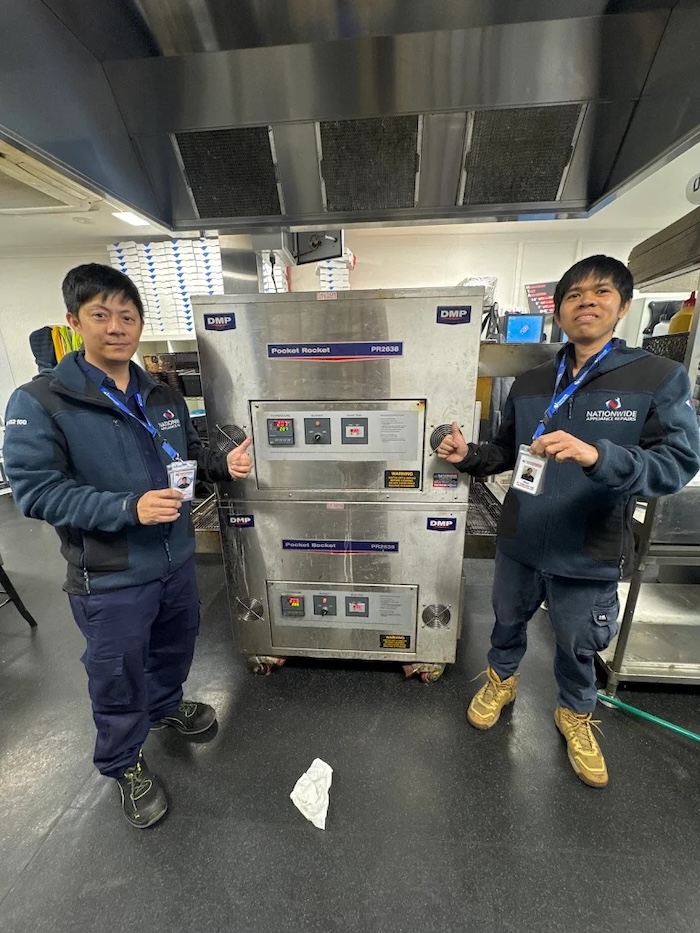
A practical rule of thumb is to compare the repair cost with the value of a comparable new appliance. If the repair cost remains well below the replacement cost and the equipment is still in good overall condition, repair is usually the faster and more cost-effective choice.
Repair vs Replacement: Commercial Considerations
| Factor | Repair | Replacement |
| Cost | Lower upfront cost when component-based | Higher upfront investment |
| Downtime | Often shorter | May involve delays (ordering, installation) |
| Lifespan | Can be extended | New equipment lifecycle |
| Best Option When | Fault is isolated and repairable | The equipment is ageing or unreliable |
Cost Considerations for Commercial Repairs
Commercial appliance repair costs can vary depending on the equipment type, fault, and parts required. In many cases, repairs begin with a service call, which typically covers initial inspection and labour.
As a general guide in Australia:
- Service call / initial assessment: approximately $180 – $300
- Typical repairs: $350 – $900
- More complex repairs: $500 – $1,500+
The total cost of a commercial repair often depends on parts, labour, and equipment type.
Importantly, businesses should consider not only the repair cost itself, but also the impact of downtime, as delays in restoring equipment can affect daily revenue and operations.
For a more detailed breakdown of service costs and what’s included, you can refer to our appliance repair pricing guide.
When Repair Is the Better Option
Repair is the right choice in the majority of cases we see. In fact, over 90% of the commercial appliances we assess can be successfully repaired and returned to full operation.
Repair usually makes the most sense when:
- The fault is isolated to one or two specific components (e.g. pump, valve, sensor, or heating element)
- The appliance is still structurally sound and within its normal working lifespan
- Quick restoration is critical to avoid disruption during peak service hours
- The repair can be completed promptly with readily available parts
In these situations, a targeted repair is often faster, more cost-effective, and less disruptive than sourcing and installing a new unit.

When Replacement May Be Considered
While most appliances can be repaired successfully, replacement may be the better long-term option in a smaller number of cases, such as when:
- The appliance has recurring faults across multiple major components
- The equipment is very old and has already undergone several major repairs
- Critical parts are no longer available or economically viable to source
- The machine no longer meets current food safety standards, energy efficiency requirements, or your operational needs
Even then, we always provide a clear diagnosis first so you can compare the realistic repair cost against replacement — including downtime and installation factors.
Do Commercial Appliance Brands Affect Repair Decisions?
Yes. Brands such as Hobart, Winterhalter, Rancilio, Breville Commercial, and popular refrigeration lines are generally well-supported with parts and are often highly repairable.
Build quality, parts availability, and service history all influence whether repair is practical. In many cases, well-maintained commercial equipment can continue operating reliably after targeted component repairs, provided the core structure remains sound.
How Professional Diagnosis Supports Business Operations
A structured diagnostic helps identify the root cause of the issue, assess the appliance’s condition, and determine whether repair is viable.
This allows businesses to make informed decisions quickly, often reducing downtime and avoiding unnecessary replacement.
When Quality Appliance Repairs Supports Commercial Clients
When your café or commercial kitchen experiences an appliance breakdown, fast and reliable support is critical to protecting your service and revenue.
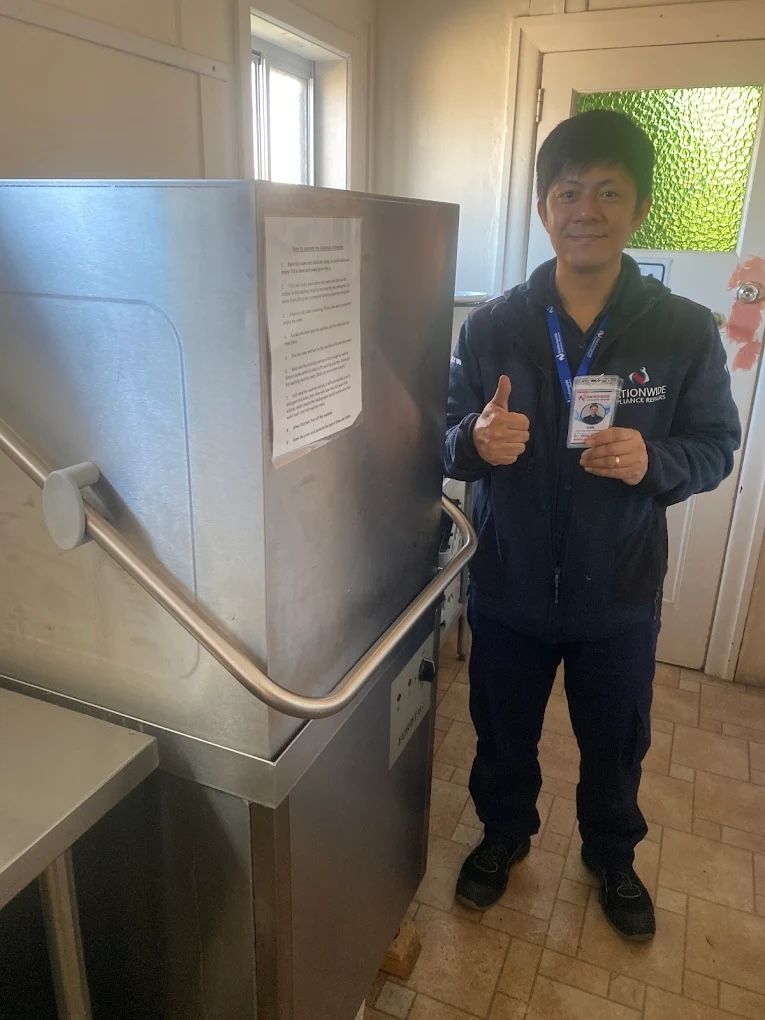
Quality Appliance Repairs has extensive experience working with hospitality businesses across Australia. We understand the pressure of peak morning rushes, tight service windows, and the real cost of downtime.
Our technicians are trained and licensed to handle both domestic and commercial appliances, with particular expertise in high-use environments where reliability directly impacts daily takings.
When you contact us, the process is straightforward:
- We start with a structured, on-site assessment to accurately diagnose the fault.
- We provide clear, honest advice on whether repair or replacement is the most practical option.
- Where repair is viable, we focus on efficient restoration to get your equipment running again with minimal disruption.
Where possible, we can schedule repairs around your peak service hours to reduce impact on your operations.
If your café or commercial kitchen is facing equipment issues right now, arranging a professional diagnostic early is one of the best steps you can take. Many businesses we work with are back up and running the same day or next morning.
Need to get your equipment back up and running? Reach out to our dedicated business support team available 6 days a week. We’re here to help get your kitchen back online quickly.
Maintaining Appliance Performance in Busy Kitchens
Preventive maintenance is one of the most effective ways to reduce unexpected breakdowns.
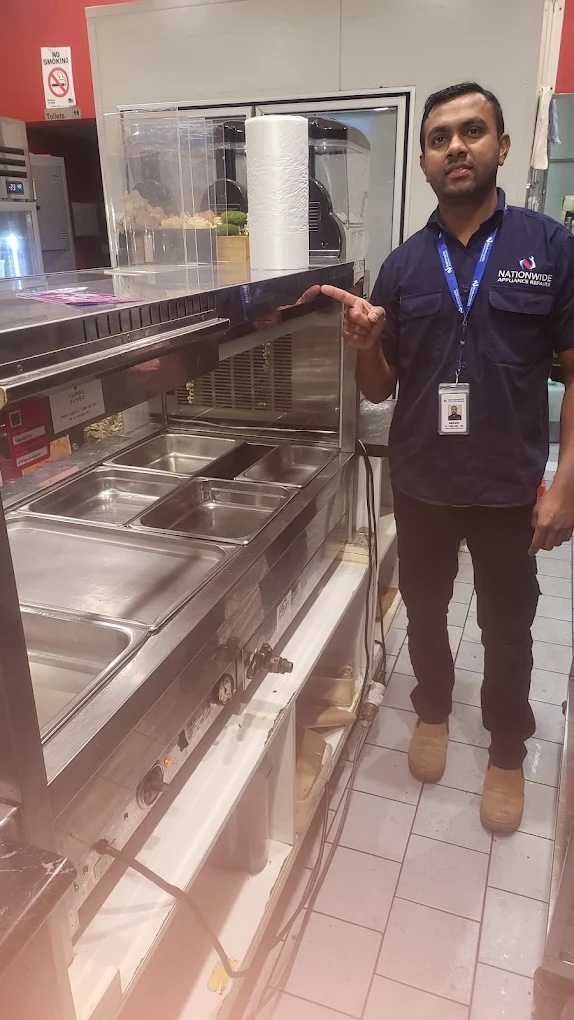
Practical steps include:
- Daily or weekly cleaning of filters and internal components
- Cleaning dishwasher filters regularly to maintain performance
- Following a consistent descaling schedule for coffee machines
- Cleaning condenser coils on refrigeration units
- Monitoring early signs of performance changes
- Scheduling professional servicing at recommended intervals
These measures help extend equipment lifespan and reduce the risk of service disruptions.
Final Thought
In Australia’s competitive hospitality environment, reliable appliances play a key role in maintaining service quality and protecting revenue.
Repair is often the most practical solution when faults are identified early and addressed promptly. When repair is no longer viable, replacement may provide a more stable long-term outcome.
A professional assessment provides clarity and helps businesses make informed decisions based on operational needs.
Frequently Asked Questions
How quickly should a commercial appliance be repaired?
As soon as possible. In commercial environments, delays can lead to further damage, higher costs, lost revenue, and potential food safety risks. Many faults can be diagnosed and resolved quickly when reported early.
Is it better to repair or replace commercial kitchen equipment?
It depends on the appliance’s age, condition, and how critical it is to your operations.
In many situations, faults are component-based and can be repaired effectively. Repair is often the more practical and faster option when the appliance is still in good condition. Replacement may be considered when issues are recurring or the equipment is no longer reliable.
What is the typical cost of commercial appliance repairs in Australia?
Costs vary depending on the appliance and fault, but many commercial repairs fall within a broad range.
Service calls typically range from $180 to $300, with total repair costs increasing depending on parts and complexity. It’s also important to consider the impact of downtime, as delays can affect daily revenue and operations.
Can repairs be scheduled to reduce disruption?
Where possible, repairs can be scheduled around operating hours to minimise disruption, particularly during peak service periods.
What types of commercial appliances do you service?
We service a wide range of kitchen and beverage equipment, including commercial coffee machines, refrigeration and freezer units, dishwashers, ovens, cooktops, and ice machines. Each job is assessed based on the appliance type and usage.